Storytelling: the Methodology of Communication.
Our storytelling methodology is there so leaders and teams can communicate well, so they move faster, collaborate more effectively and build stronger trust internally and externally.
At the heart of what we do is help people use storytelling to bring out their natural strengths: to be more human, more empathetic and more impactful in the way they communicate and lead.
Our core methodology sits behind every workshop we run. The tools and techniques are consistent, but they flex to who we work with and what outcome is needed, adjusted for an hour, a half day or a full day.
The methodology adapts to you.
The quality of the experience doesn’t.
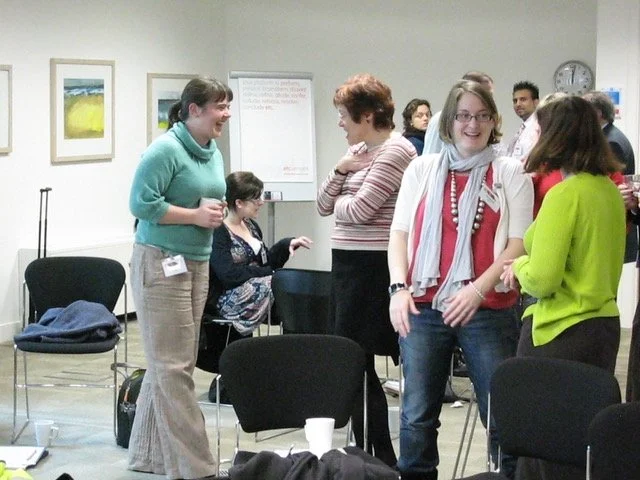
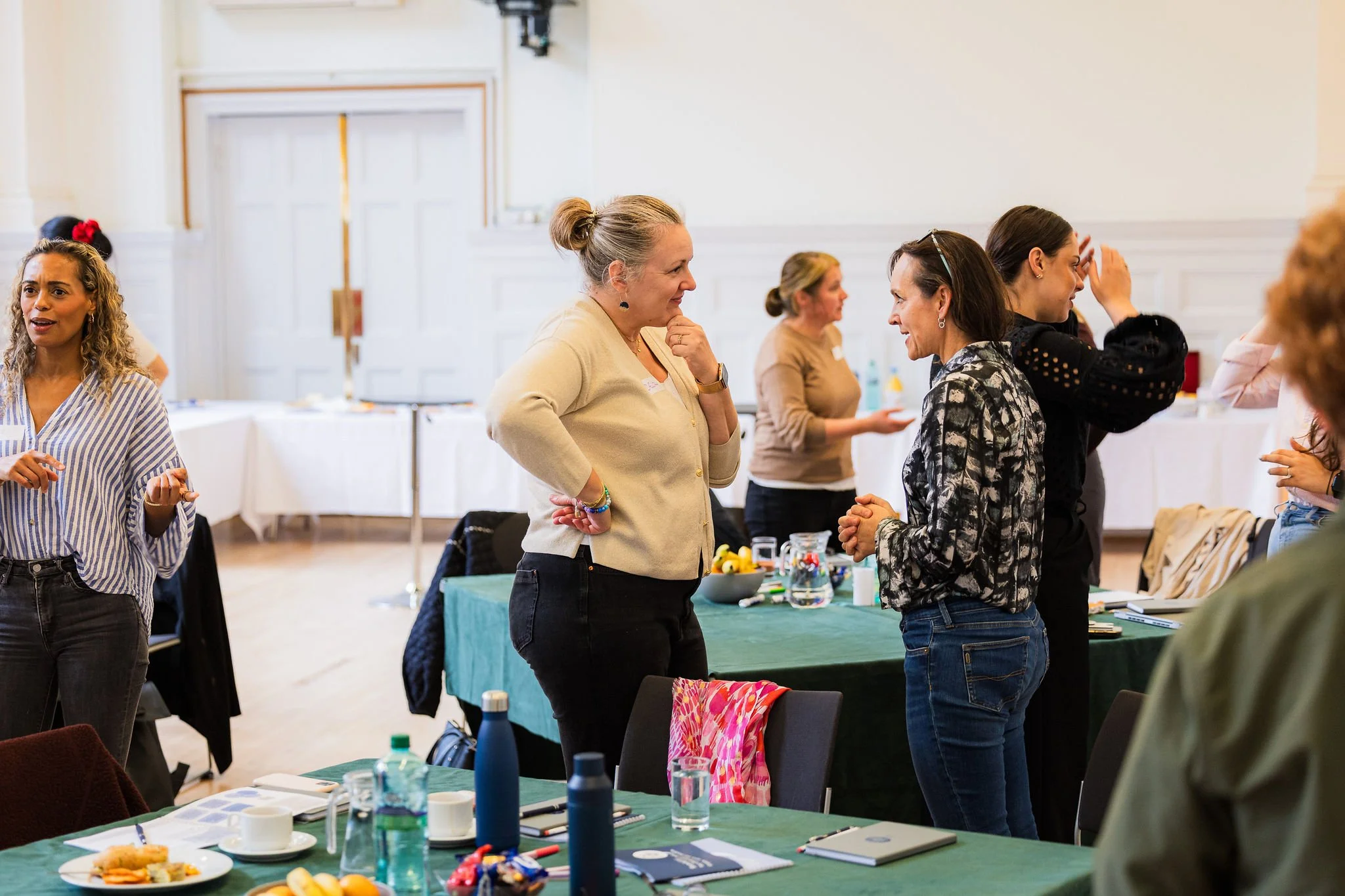
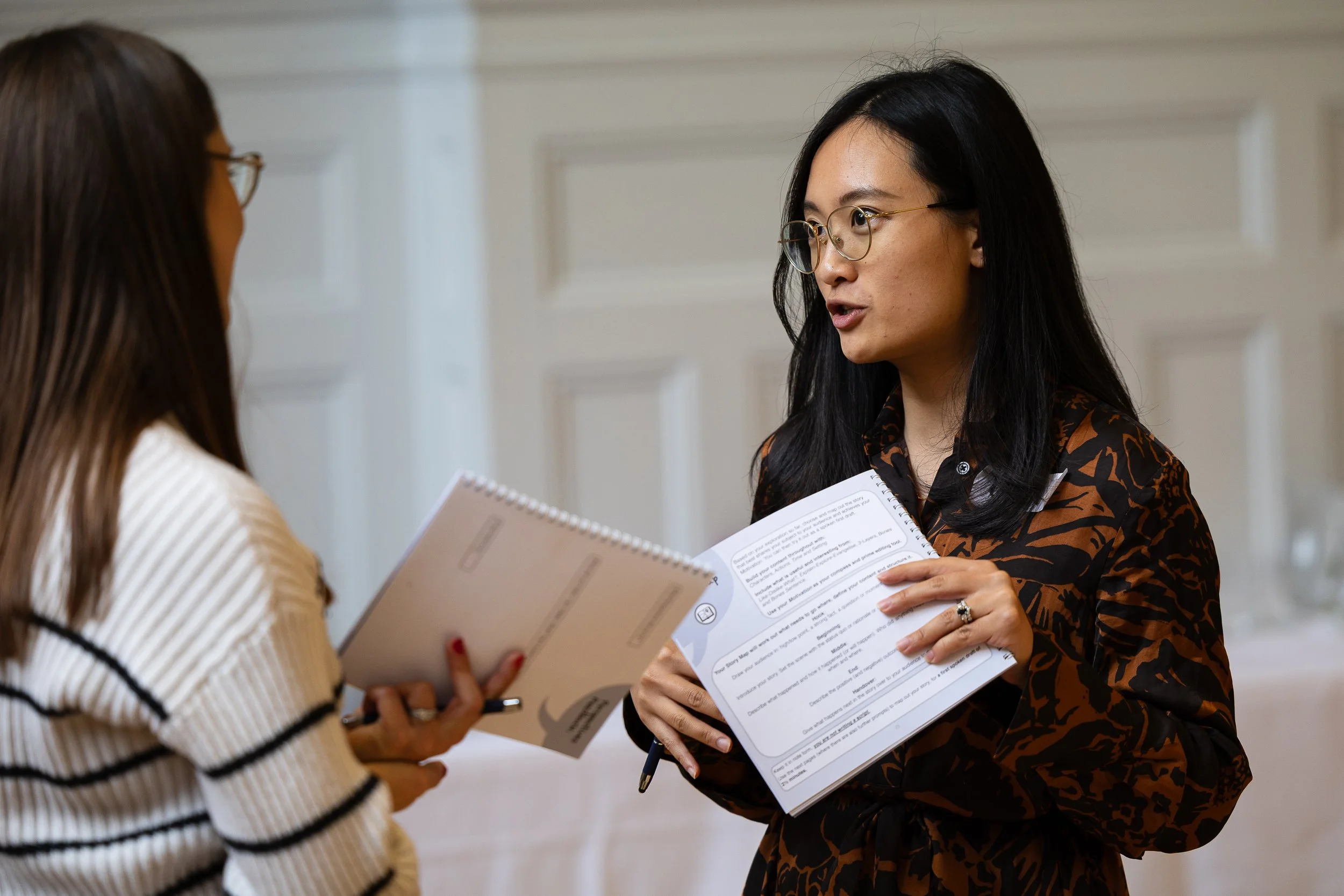
Our workshops and training are participatory, active, and fun.
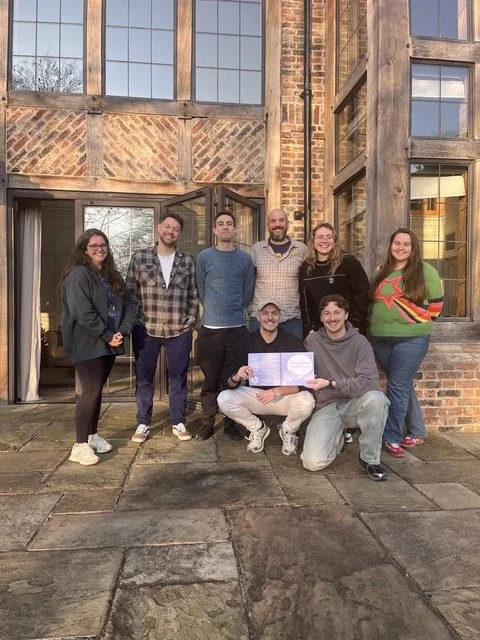
Designed and delivered by Lily and Josh, who create an informal but focused, energetic and safe working environment where participants can get the most from storytelling.
Every participant receives a handbook created specifically for the workshop they attend.
Our Application Surgeries are follow-on sessions designed to support participants in putting what they have learnt into practice and to develop that practice further over time.
Storytelling for Leaders:
Understanding and exploring ideas, strategies and challenges fully.
Connecting with and engaging the people you need to bring with you.
Communicating so that people think, feel and act the way you need them to.

Why it matters:
Leaders are required to do three things with communication that most people are not: give clarity, bring people with them through uncertainty and inspire belief. Storytelling makes all three possible. It works whether you are presenting a vision, sharing results, guiding a team through change, handling a difficult conversation or simply trying to make an idea land in a meeting.
Leaders leave with a repeatable process for crafting and delivering presentations, reports, pitches and conversations that are clear, empathetic, memorable, and tailored to their audience.
Focus:
Participants develop practical tools to ensure their communication is relevant to their audience, has a clear intention and purpose, carries a human and tangible quality and uses language that is memorable and meaningful.
Through the process of working on their communication together, participants don't just develop stronger communication skills, they build a fuller, more nuanced understanding of their shared work, challenges and direction.
The result is communication that builds trust, encourages action and strengthens relationships, in every context a leader faces.
Storytelling at Work:
Communicating clearly and purposefully.
Building trust and stronger relationships. Motivating and aligning people.
Handling challenging subjects with clarity and empathy.
Influencing decisions and winning support. Working out and sharing ideas.
Crafting and adapting communication that lands.
Why it matters:
Poor communication at every level costs organisations time, energy and money.
When people have a shared methodology for communicating with clarity and intent, whatever their role or the situation, the quality of every interaction improves.
Decisions get made faster, ideas get a better hearing, and work gets done with less friction.
Focus:
Storytelling is not magic, it’s a method you can use as a practical framework for any form of communication at work, spoken or written, planned or spontaneous.
The methodology gives people a way of thinking about what they want to communicate, who they are communicating with and what they want to happen as a result, before they open their mouth or put a word on a page.
Participants leave with a set of tools they can reach for in any situation, not just formal presentations.
Storytelling Teams:
Communicating clearly and consistently within the team.
Building a shared language and approach to communication.
Improving how the team communicates with clients, stakeholders and other teams.
Why it matters:
Teams that communicate inconsistently create confusion and erode trust.
A shared methodology for purposeful communication raises the quality and coherence of every interaction the team has: in a pitch, a meeting, a presentation, internally or externally.
Teams that have genuinely interrogated and articulated their work together think more cohesively and collaborate more effectively as a result.
Focus:
Using storytelling to surface and align the thinking within a team, developing a common approach to how they craft and share their communication with the world outside them.
As participants work together on real communication, something additional happens: the team builds a fuller, more honest picture of their shared work, challenges and priorities.
The learning goes beyond communication technique and into the team's understanding of itself.
Strategy and Change Engagement:
Developing shared understanding of a strategy or change.
Aligning leaders around a shared intention and purpose.
Building confidence to communicate it clearly and compellingly throughout the organisation.
Why it matters:
The gap between a strategy being announced and it being understood and acted on is almost always a communication problem.
When leaders leave with both a shared grasp of the direction and the tools to communicate it in a way that connects with their specific teams, the organisation moves faster and more coherently.
Focus:
Using storytelling to help leaders digest, interpret and own a strategy or change, so they can carry it into their organisations not as a brief they've been handed but as something they understand and believe in. Depending on where a group is in the process, this might mean using storytelling to actively explore, interrogate and shape strategy together before it is ready to share or giving leaders the space to interrogate and make sense of what they've heard at a strategy launch in relation to their area of the business.
From that shared foundation, each leader can then shape their communication to be meaningful and relevant to their own team or stakeholders, so the message lands differently for different people, but always from the same place of genuine understanding.
Presentation and Speech Development:
Creating a presentation or speech with a clear, compelling narrative.
Developing content that is structured, engaging and built to land.
Delivering with confidence and impact.
Why it matters:
A high-stakes presentation or speech is often a defining moment, for a leader's credibility, for a team's confidence, for a client relationship or a business decision.
Getting the content and structure right is as important as the delivery.
Focus:
Using storytelling to build a presentation or speech from the inside out, starting with what matters most to the audience and constructing a piece that earns attention and drives the response you need.
Building the speaker’s skills to be spontaneous and dynamic, to meet the audience’s engagement while staying within the purpose of the presentation.
Business-Wide Communication Development:
Raising the standard of communication across the organisation.
Building a common language and methodology for purposeful messaging.
Developing everyone who communicates as part of their work.
Why it matters:
Communication is not a soft skill, it is the mechanism through which work gets done, decisions get made and culture gets built. Organisations that invest in it as a capability see the difference in performance, alignment and how they are experienced by clients and partners.
Focus:
Using storytelling as a shared framework that gives people at every level a practical, repeatable process for communicating with clarity, empathy and intent, whatever their role or context.